
How to get around Paris: the complete 2026 guide to understanding everything
Whenever you arrive in a new city, there’s always one thing you need to figure out: how the public transport system works. And Paris is no exception, although driving is definitely not the easiest option! Getting around Paris is simple and affordable, thanks to one of the most extensive public transport networks in the world, including the metro, RER trains, buses, trams and now even a cable car. To help you find your way around, here’s our complete guide to know how to get around Paris during your stay.
The essentials at a glance
To get around Paris easily, rely on public transport and choose your ticket or pass according to your stay:
- 🚇 Metro The fastest option for getting around central Paris, with 16 lines and more than 300 stations.
- 🚆 RER The most convenient option for going further afield: Versailles, Disneyland Paris, La Défense and the airports.
- 🚌 Bus The most enjoyable option if you want to take in the views, with a network that is accessible to pushchairs.
- 🚲 Bike A good alternative for shorter journeys, especially with Vélib’.
Tickets: Metro-Train-RER €2.55 ($2.94) · Bus-Tram €2.05 ($2.36) · Navigo Day €12.30 ($14.19) · Airports €14 ($16.15).
Where to buy them: use a Navigo Easy pass (€2 / $2.31) or your smartphone with Île-de-France Mobilités or Bonjour RATP.
Our tip: if you’re making lots of journeys in one day, the Navigo Day pass becomes worthwhile from around 5 journeys.
- Why using public transport is the best way to get around Paris
- Getting around Paris by metro: your go-to option
- Getting around Paris by RER and Transilien trains: going further afield
- Getting around Paris by bus, tram and cable car
- How much does a journey cost? Paris transport fares in 2026
- Which ticket or pass should you choose for getting around Paris?
- How to pay for and buy your Paris transport tickets
- Other ways to get around Paris: cycling, walking and taxis
- Our tips for getting around Paris stress-free
Why using public transport is the best way to get around Paris
Let’s be honest: in Paris, having a car is often more hassle than it’s worth. Between traffic jams, finding a parking space and the eye-watering prices, plus restricted traffic zones, you’re much better off relying on the city’s public transport network.
And what a network it is! With the metro, RER, buses, trams and even a brand-new cable car, you can reach pretty much any part of Paris and the surrounding area quickly, without ever being too far from a station. It’s convenient, affordable and by far one of the most environmentally friendly ways to explore the city.
There’s another advantage that’s easy to overlook: getting around Paris by metro or on foot is also one of the best ways to get a feel for the different neighbourhoods, stumble across a local bakery or discover a little square you would never have noticed from a car.

Getting around Paris by metro: your go-to option
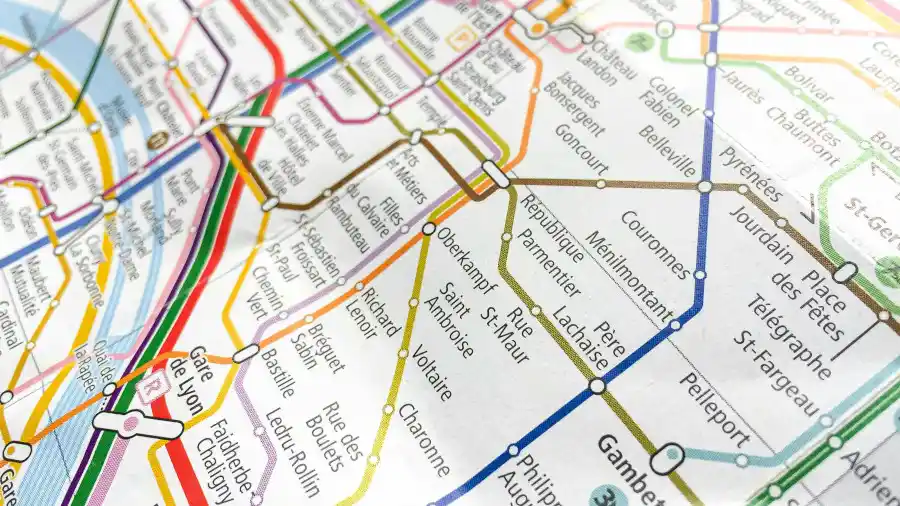
The metro remains the fastest and most efficient way to get around Paris. With 16 lines and more than 300 stations, you’re never more than a few minutes’ walk from an entrance, usually recognisable by its famous yellow “M”.
A few useful things to know:
- Opening hours: the metro runs every day from around 6 am to 12.45 am, with services extended until 1.45 am on Fridays, Saturdays and the nights before public holidays.
- Lines and directions: each line has its own colour and number; the direction is shown by the name of the final stop.
- Frequency: trains run every 2 to 4 minutes during peak times, and slightly less frequently during quieter periods.
Good to know: the first section of the new Line 18 (Massy-Palaiseau – Christ de Saclay) is due to open in autumn 2026, as part of the major Grand Paris Express project, which is gradually expanding the network.
You can find all the information about the metro lines on the RATP website.

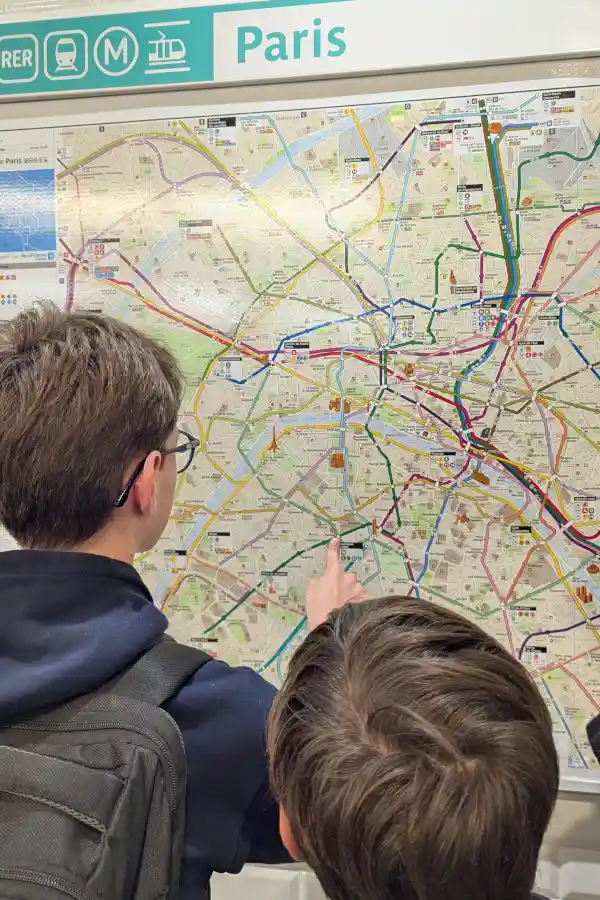

It’s worth pointing out, however, that accessibility remains a weak point of the Paris metro network. To be completely honest, if you’re travelling with a pushchair, bulky luggage or someone with reduced mobility, the Paris metro can be challenging. Most older stations have neither lifts nor ramps. Only Line 14 (automated) and all trams are fully accessible.
In this case, opt for the RER, Transilien trains or buses, which are better equipped, and always check the accessibility of your stations using the official apps. And if you’re travelling with a young child, a baby carrier can be a real lifesaver!
Getting around Paris by RER and Transilien trains: going further afield
The RER (meaning Regional Express Network) is ideal for covering longer distances or travelling to the suburbs. Its five lines (A to E) cross Paris from one side to the other and serve major attractions beyond the ring road.
- The RER runs every day from around 5.30 am to 12.45 am.
- It serves Versailles, Disneyland Paris, La Défense, the Stade de France and the airports (with the appropriate ticket).
- Transilien trains complement the network, with regional services departing from Paris’s main railway stations (Gare du Nord, Gare de l’Est, Gare de Lyon, Austerlitz, Montparnasse and Saint-Lazare).
A little tip: within Paris, the RER can save you a lot of time because it makes far fewer stops than the metro. If you need to cross the city from east to west, RER A is often unbeatable.
And if you’d like to discover where the RER and Transilien can take you, check out our article about some sometimes unexpected destinations outside the city.
Getting around Paris by bus, tram and cable car
The bus: the most enjoyable (and accessible) option
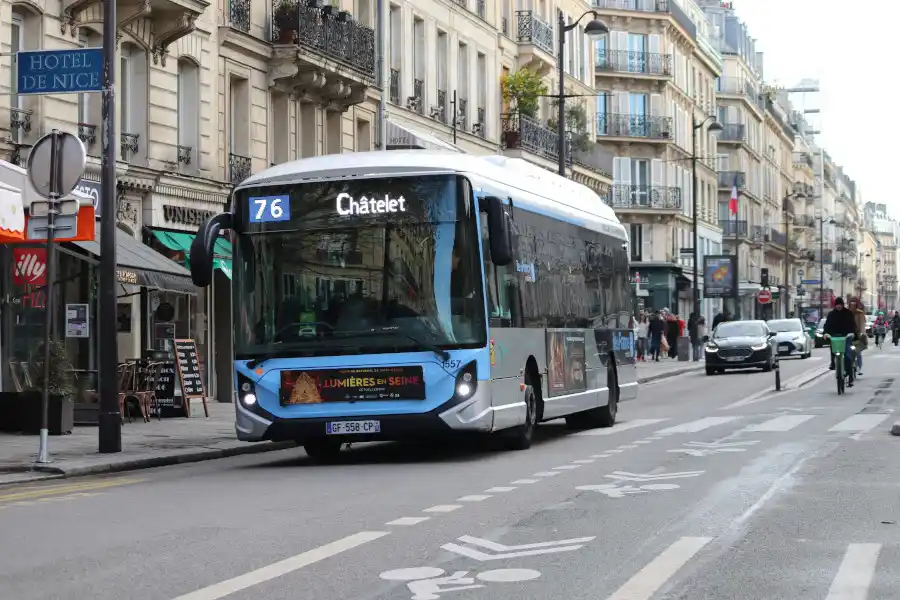
Buses are often overlooked, and they really shouldn’t be. They’re actually one of the nicest ways to get around Paris because you can enjoy the views throughout your journey. Buses generally run from 5.30 am to 12.30 am, with the Noctilien night bus network taking over overnight.
- All buses are accessible, with low floors and dedicated spaces for pushchairs and wheelchairs.
- Almost half of the routes operate on Sundays and public holidays.
The tram
With 15 lines circling the city and serving the nearby suburbs, the tram is practical, modern and 100% accessible. It’s an ideal complement to the metro for journeys around the outskirts of Paris.
Cable C1: the new cable car
One of the latest additions to the network, Cable C1, the first urban cable car in the Île-de-France region, now connects Créteil with Villeneuve-Saint-Georges (Val-de-Marne) in around 15 minutes. Eco-friendly and fully electric, it is accessible to pushchairs, bicycles and people with reduced mobility, and can be used with a standard public transport ticket.
How much does a journey cost? Paris transport fares in 2026
Since the major fare reform, getting around Paris has become much easier to understand: no more zone calculations for occasional journeys, with two main single tickets now available.
| Ticket | Full fare 2026 | What it covers |
|---|---|---|
| Metro-Train-RER Ticket | €2.55 | Metro, RER and Transilien throughout Île-de-France (excluding airports) |
| Bus-Tram Ticket | €2.05 | Bus, tram and Noctilien (excluding airports) |
| Navigo Day Pass | €12.30 | Unlimited travel on all modes for one day (excluding airports) |
| Paris Region ↔ Airports Ticket | €14 | Journey to/from Orly and CDG |
There are two important things to bear in mind that often surprise visitors:
- The Metro-Train-RER ticket cannot be used for a connection to a bus or tram (and vice versa). A metro journey followed by a bus journey means two different tickets.
Which ticket or pass should you choose for getting around Paris?
This is THE question everyone asks. The answer mainly depends on how long you’re staying and how much travelling you plan to do.
- Several-day tourist stay: the Paris Visite pass (1, 2, 3 or 5 days) offers unlimited travel, including airports and Disneyland, as well as a few partner discounts.
A traveller’s tip: if you arrive on a Friday, forget the Navigo Week pass (it ends on Sunday) and opt instead for the Navigo Day pass or Paris Visite. Find different passes here.
How to pay for and buy your Paris transport tickets
Here too, the move towards digital tickets has changed everything. To get around Paris in 2026, you can choose between:
- Your smartphone: via the Île-de-France Mobilités or Bonjour RATP app, you can buy and validate your tickets directly.
- Contactless bank card: already available on buses and the Montmartre funicular, and gradually being introduced on the metro and RER (with a small surcharge and no connections).
- Bus ticket by SMS: send “Bus” followed by the route number to 93100 as a last-minute option (€2.50).
A useful tip: download an official app before you even arrive. You’ll avoid queues at ticket machines and can buy your tickets at your own pace.
Other ways to get around Paris: cycling, walking and taxis
Public transport isn’t everything, and luckily, it doesn’t have to be.
- Walking remains one of the best ways to discover Paris. Many iconic sights are closer than you might think (it’s only about 25 minutes on foot from the Louvre to Notre-Dame).
- Cycling has really taken off thanks to the city’s growing network of cycle lanes. The Vélib’ bike-sharing system is perfect for shorter journeys.
- Official taxis and private hire vehicles are useful in the evening or when you have luggage. Never get into a vehicle that approaches you unsolicited: only use official Paris taxis at designated taxi ranks.

Our tips for getting around Paris stress-free
A few simple tips for a smooth stay:
- Plan around engineering works: several metro and RER lines are sometimes partially closed, particularly during the summer. Check the traffic situation on the apps before setting off.
- Watch out for pickpockets: keep your bag closed and in front of you, especially in busy stations and crowded carriages.
- Buy tickets through official channels: avoid unofficial sellers, as their tickets may be invalid.
- Keep your validated ticket until you leave the network: ticket inspections are frequent.
- Watch out for fake inspectors: genuine inspectors wear an official uniform and can show you their professional ID.
Book your holiday at the best price with our partners




How do you get around Paris as a tourist?
The easiest option for tourists is to combine the metro for longer journeys, buses to enjoy the views, and walking around the central neighbourhoods. Get yourself a Navigo Easy pass or download the Île-de-France Mobilités app, then choose a Navigo Day pass or Paris Visite depending on the length of your stay.
What is the best way to get around Paris?
The metro is the fastest and most affordable way to get around central Paris. For longer journeys or trips to the suburbs (such as Versailles or Disneyland), the RER is more efficient. And if you want to explore the city while enjoying the scenery, nothing beats travelling by bus or on foot.
What is the best pass for visiting Paris?
It depends on how much travelling you plan to do. The Navigo Day pass (€12.30) is ideal for a busy day of sightseeing. For a stay of several days with airport transfers, Paris Visite or the Navigo Week pass (€31.60, Monday to Sunday) may offer better value.
How do you pay for the metro in Paris?
You can buy your metro tickets using a Navigo Easy pass or directly on your smartphone via the Île-de-France Mobilités or Bonjour RATP apps. Contactless bank card payment is also available on some services and is gradually being rolled out across the network.
How can you get around Paris during a strike or disruption?
Check the real-time traffic situation on the RATP and Île-de-France Mobilités apps before setting off. Allow extra time, keep several possible routes in mind, and consider alternatives such as walking, bike-sharing or buses when the metro is disrupted.
Which app should you use to get around Paris?
The two main official apps are Île-de-France Mobilités and Bonjour RATP. They allow you to buy and validate tickets, plan routes in real time and check the status of different lines, particularly during engineering works. Personally, I also really like the Citymapper app, which is very easy to use.

If you’re planning a family trip to Paris, you’ll find lots more useful information in our complete guide: visiting Île-de-France as a family.
♥♥♥ Flo & co ♥♥♥
Planning a vacation in France? Here are our partners to help you organize your trip.
- Find train tickets
- Book a hotel or rent an apartment
- Take my child to try out unique accommodation
- Try “van life” and look for a van or motorhome rental
- Find gear for my trip or for my home
When you book through our partners, we earn a commission that helps keep this blog running, and the price stays the same for you! Thanks for your support!
▼▼▼▼▼▼▼▼▼▼▼▼▼▼▼▼▼▼▼▼▼▼▼▼▼

Share this article with your friends!

Vous aimerez aussi

3 days in the Périgord Noir with family

A city break on the French Riviera: 3 sun-soaked ideas